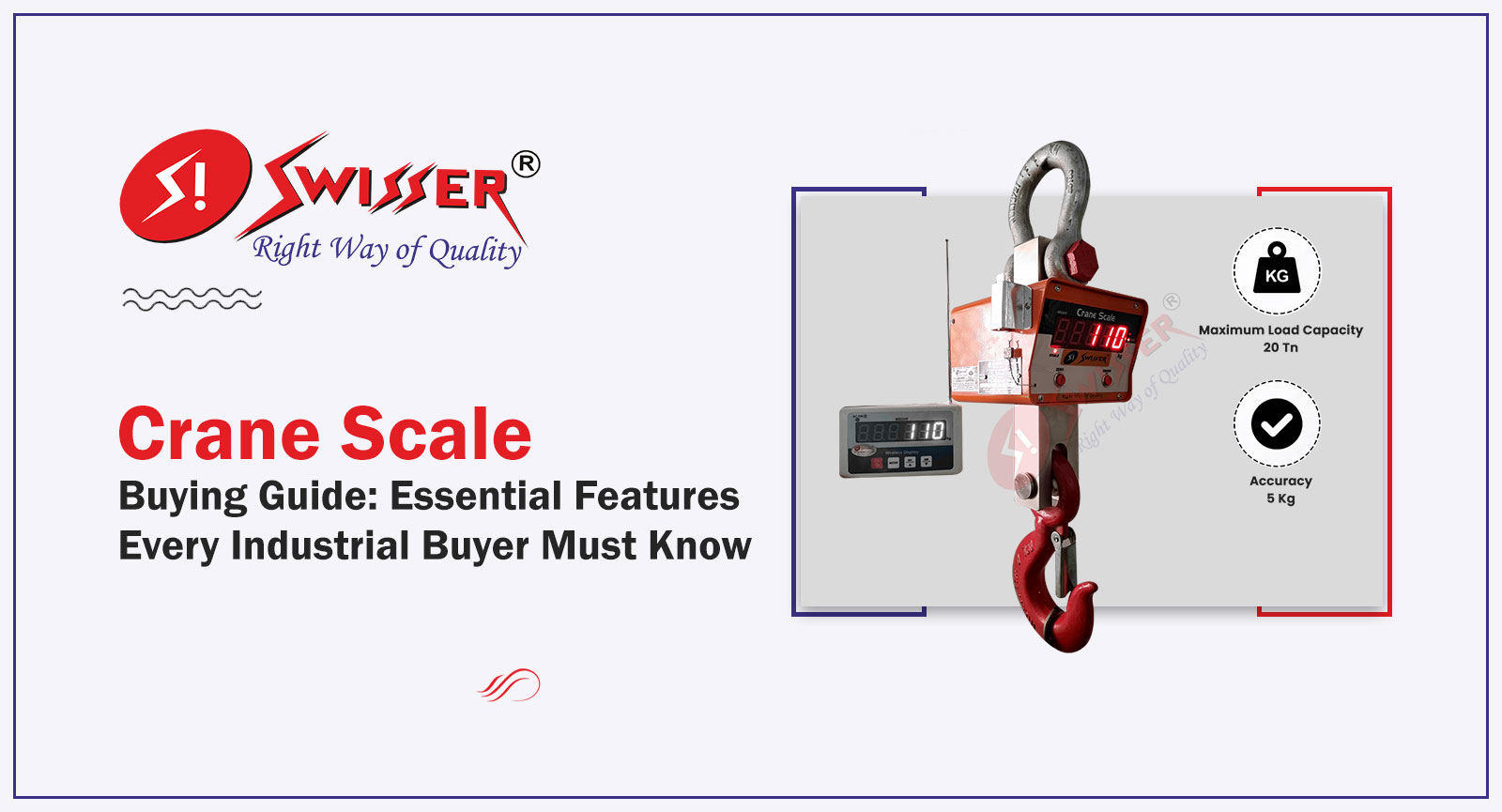
When it comes to handling heavy loads in industries, accuracy is everything. Whether you run a warehouse, factory, shipping yard, or construction site, knowing the exact weight of materials is important for safety and smooth operations. This is where a Crane Scale becomes useful. It is a simple yet powerful weighing device that is attached to a crane or hoist to measure heavy loads while lifting them.
A crane weighing scale helps businesses save time because it allows weighing and lifting at the same time. There is no need to move heavy materials to a separate weighing platform. This improves productivity and reduces manual effort. For industries that deal with bulk materials like steel, cement, machinery parts, or containers, these weighing scales are a practical solution.
Things to Look for Before You Buy a Crane Scale
Before you invest in a weighing scale, you need to understand this product. Investing in the right scale means better efficiency and long-term cost savings. When materials are weighed correctly, there is less risk of errors in billing, shipping, and production. Here are the must-have features that separate a professional-grade scale from a cheap one.
1. Build Quality:
Industrial environments are brutal. They are dusty, hot, and full of vibrations. You need a scale with a heavy-duty alloy steel or aluminum die-cast housing. If the casing feels like thin plastic, it won’t last a week in a real-world setting. Look for internal shock-absorbing mounts that protect the load cell from sudden jerks when the crane starts moving.
2. Safety Factor
In the world of lifting, Capacity and Safety Load are two different things. A scale rated for 5 tons should be able to physically hold much more without snapping. Reliable Crane Scale manufacturers will clearly state a safety factor (often 400% or 500%). This ensures that even if there’s a sudden dynamic load or a slight mistake in weight estimation, the hook remains secure.
3. Remote Control & Wireless Integration
Safety protocols usually dictate that workers stay a certain distance away from a suspended load. A scale without a remote is a nightmare to use because you’d have to climb up or get dangerously close to hit the “Tare” or “Zero” buttons. Modern industrial scales now come with high-range infrared or radio remotes. Some even sync directly to a smartphone app or a central PC, allowing you to log data into your ERP system automatically without writing anything down on a clipboard.
4. Display
Inside a dim warehouse, a bright red LED display is king. However, if your crane operates outdoors in the afternoon sun, those LEDs can wash out completely. For outdoor use, look for high-contrast LCD screens with a strong backlight. Large digits (at least 30mm or more) are essential so the operator can read the weight from 20 feet away without squinting.
5. Battery Life and Fast Charging
There is nothing more frustrating than a production line stopping because a scale is dead. Look for models with “Auto-Sleep” functions that preserve battery when the scale isn’t under load. Better yet, look for units with swappable battery packs, so one can be on the charger while the other is in the air.
6. Peak Hold and Accumulation
In an industrial setting, you’re often weighing multiple items to fill a container. An “Accumulation” feature allows you to add up multiple lifts to see the total weight. Meanwhile, a “Peak Hold” feature captures the highest weight recorded during a lift—perfect for stress testing or specialized industrial processes.
Conclusion
Choosing a scale is about balancing precision with ruggedness. You want a tool that is sensitive enough to give you an exact reading but tough enough to get bumped around in a busy shipyard. When you are ready to invest in equipment that truly meets these industrial standards, Swisser Instruments provides the perfect blend of durability and high-tech accuracy to keep your business moving safely.