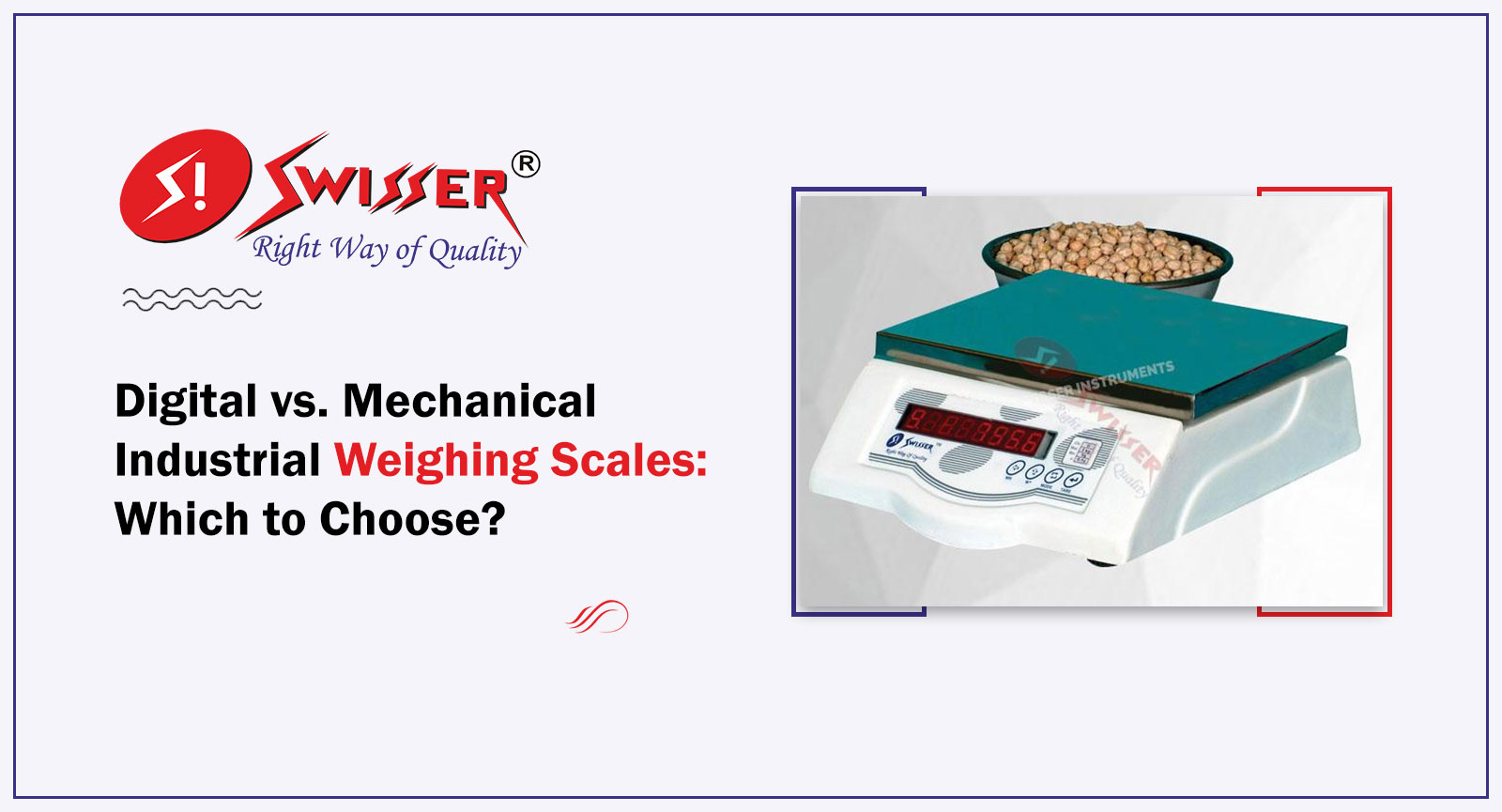
People today use digital and mechanical weighing scales extensively. Every time a consumer purchases weighing equipment for business or residential usage. There are two types of weighing scales available on the market – Mechanical Scale and Digital Scale. Mechanical scales are a classic method of measuring weight, but digital scales are more contemporary and accurate.
When shopping for a scale, you may ask what the difference is between a mechanical and a digital scale, and which one to choose. In this article, we’ll discuss how these scales are different. Then you’ll be able to determine if you should get a digital scale or a mechanical scale that meets your demands!
Mechanical Vs. Digital Weighing Scale
Mechanical weighing scales employ mechanical ways to determine your weight and can often manage loads of up to 120 kg. Weighing devices’ functioning is usually mechanical, although accuracy can vary according to item variances.
Digital weighing scales are more accurate than previous scales. Modern scales grew alongside technological breakthroughs. These scales will no longer be used just to determine personal weight. Digital scales typically have a capacity of 150 kg.
Advantages of a Mechanical Scale
- The mechanical scale measures weight using a spring. It measures weight by stretching a spring.
- The biggest advantage is that no battery is required to monitor your weight. Simply stand on a weighing scale and you will find out your weight.
- Reading will be rather straightforward to quantify. Before weighing, no settings should be changed or the machine turned on. It is also easy to calibrate.
- The display is basic enough that even the end user can easily weigh and measure anything. When you measure the weight, you can see the pointer on the scale. It makes it easier to check the reading.
Advantages of a Digital Scale
- This scale works with a strain gauge load cell. It measures 0.98 grams using a pen cap.
- It is quite trustworthy and will not provide false readings. It is automatically calibrated every time you switch it on.
- This weighing scale is simple to use and has an automated turn on option. It will also switch off automatically after use.
- The main benefit is that it is highly accurate and durable. Failure is rare, and it is frequently accompanied by a business warranty.
- Some scales will provide you with a body composition analysis, as well as BMR, fat percentage, and other measurements. It immediately syncs the info to your mobile phone.
Mechanical vs. Digital: Applications
Often, you buy a weighing scale for more than simply its weighing function. The more your scale can do for itself, the less time and effort you’ll have to devote to figuring out a better, and certainly more expensive, way to accomplish things. How do mechanical scales compare to digital scales in this regard?
Mechanical scales
Mechanical scales only offer a weight readout. A mechanical scale has a weigh-below hook and can determine density, solely providing a weight reading.
Digital Scales
The ordinary digital scale is capable of checkweighing, parts counting, and percentage weighing. Advanced or specialist scales may include features like peak hold, dynamic ‘animal’ weighing, accumulation, PLUs (Product Look Ups), and more. This provides you several opportunities to use your scale for things that would normally be completed manually.
Conclusion
Mechanical and digital scales play critical roles in production and retail. One may also purchase a weighing scale for household and industrial use. These scales’ ease of use, along with their low prices and quality, made them more accessible than ever before. If you need weighing equipment, contact Swisser Instruments. We are a reputable manufacturer and supplier of weighing products including weighbridges, platform scales, crane scale, and more.