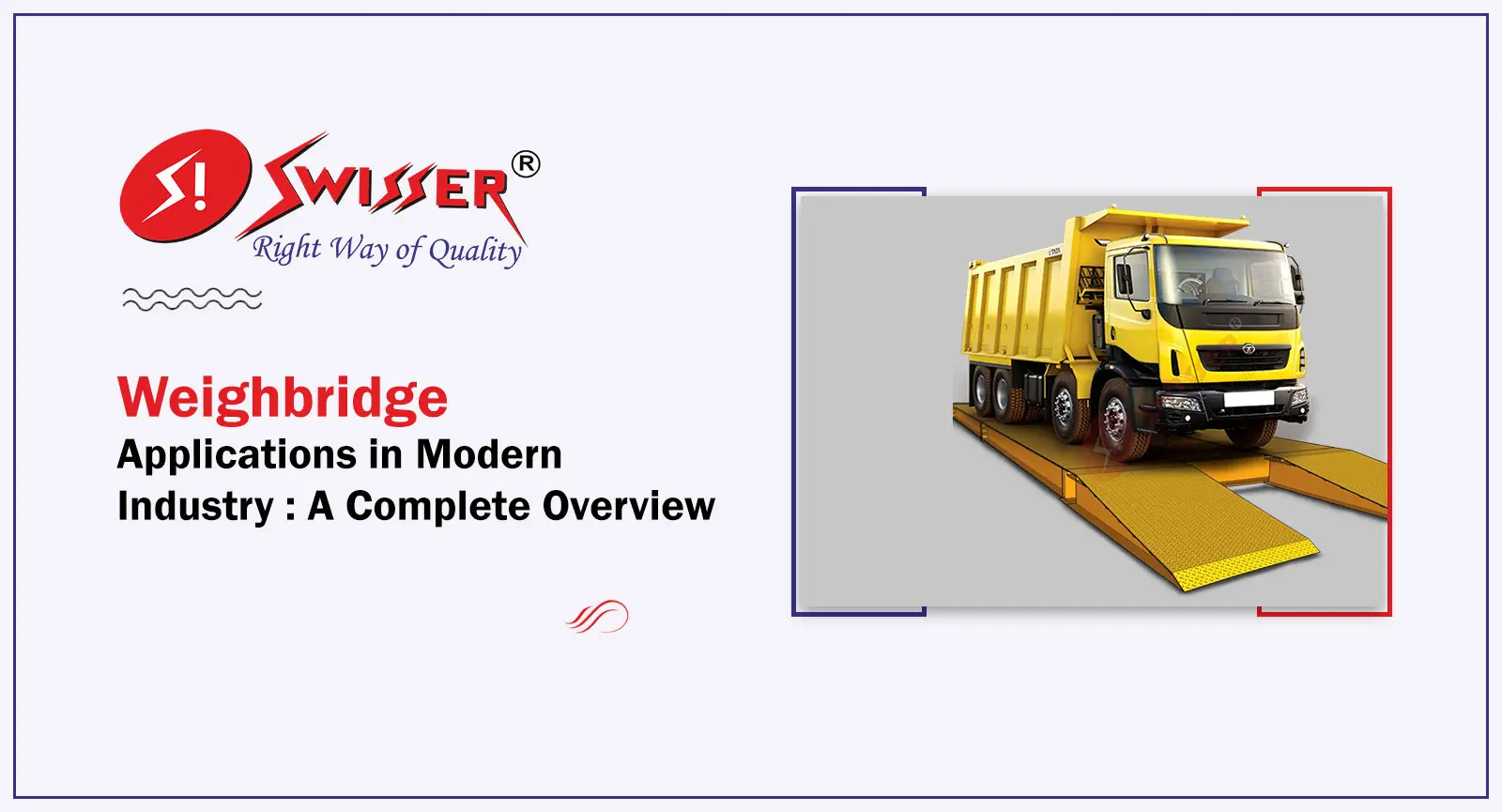
In many industries, accurate weight matters a lot. Trucks come in loaded, trucks go out loaded, and everything in between depends on correct weight. This is where a Weighbridge becomes important. It’s a giant scale to weigh loaded trucks or other vehicles. This weighing scale plays a very serious role in daily industrial work. Most factories, plants, and yards cannot function smoothly without a truck scale today.
What is a Weighbridge?
It is a large weighing system used to measure the weight of heavy vehicles like trucks, trailers, and tippers. The vehicle drives onto the platform, and the total weight is recorded. It is a large, floor-mounted scale designed to weigh entire vehicles and their contents. This helps companies know exactly how much material is coming in or going out.
Why weighbridges are needed in industries
Let’s be practical. If a company does not know the correct weight of raw material coming in, how will it manage inventory? If outgoing trucks are overloaded or underloaded, it causes loss, legal trouble, or safety issues.
A weighing scale solves this problem. It gives accurate weight, every time.
Applications of Weighbridge in different industries
The weighbridge uses are not limited to one sector. You’ll find them everywhere.
In mining industries, truck scales are used to measure minerals, coal, and ores being transported. Every ton matters here.
In construction sites, trucks carrying sand, cement, stones, or debris are weighed regularly. This helps control material usage and prevents overloading.
In agriculture, weighbridges are used at grain markets, sugar mills, and fertilizer plants. Farmers and buyers both depend on correct weight for fair pricing.
In logistics and transport companies, weighing scales help maintain load limits and avoid penalties on highways.
Manufacturing plants also rely heavily on truck scales to track raw material intake and finished goods dispatch.
How a weighbridge helps daily operations
A weighing scale is not just about weight. It helps with planning, billing, and record keeping.
Most modern electronic weighbridges are connected to software. This means weight data gets recorded automatically. No manual writing. Less human error. Faster process.
This saves time at entry and exit points and keeps operations moving smoothly.
Types of weighbridges used today
Industries use different types of weighing scales based on space and requirement.
Pit type weighbridges are installed at ground level. Vehicles can drive on and off easily without ramps.
Pitless weighbridges are installed above ground and are easier to maintain. These are common in areas where drainage is a concern.
There are also mobile weighbridges used for temporary sites like construction projects.
The choice depends on location, traffic volume, and budget.
Benefits of using a weighbridge
People working on the ground will tell you the real benefits.
- First, accuracy. You know the exact weight. No guessing.
- Second, transparency. Buyers, sellers, and transporters all see the same number.
- Third, safety. Overloaded vehicles are risky. Truck scales help avoid that.
- Fourth, compliance. Government rules are strict about vehicle load limits. A weighing scale keeps you on the safe side.
Role of weighbridges in modern industry
In today’s time, industries are becoming more data-driven. Weight data helps in audits, reports, and cost control. A weighing scale is no longer optional. It’s part of basic infrastructure.
With automation and digital records, truck scales have become smarter and more reliable than ever.
Final Words
A Weighbridge may not look fancy, but it quietly supports daily industrial work. From mining to farming, from factories to transport yards, its role is everywhere. Once installed properly, it brings control, accuracy, and trust into operations.
If you are planning to install a reliable weighbridge system, Swisser Instruments is a name you can trust. Known for precision, strong build quality, and dependable performance, we offer weighing scale solutions designed for real industrial conditions. Their systems focus on accuracy, durability, and long-term value.